
Evogiant storefront logo, link to home page
BasketSign in
UK & EU standardFirst-time buyer guideHome + public AC charging

Type 2 Explained (UK & EU): The First-Time EV Buyer’s Guide

Buying your first EV is exciting, but the charging terminology can be confusing very quickly. One of the first things most new drivers come across is Type 2, and understanding it properly makes everything else much easier.

In simple terms, Type 2 is the standard AC charging connector used across the UK and most of Europe. It is the connector most first-time EV owners will use for home charging and for a large share of public AC charging. In formal standards language, Type 2 sits within the IEC 62196 family of EV connector standards, and the AC connector itself is commonly referenced under IEC/EN 62196-2.

What Type 2 actually means

Type 2 is the plug shape used for AC charging on most modern EVs and plug-in hybrids in the UK and Europe. It is commonly found on home wall chargers, untethered public AC chargers, workplace chargers, hotel chargers, and destination charging points.
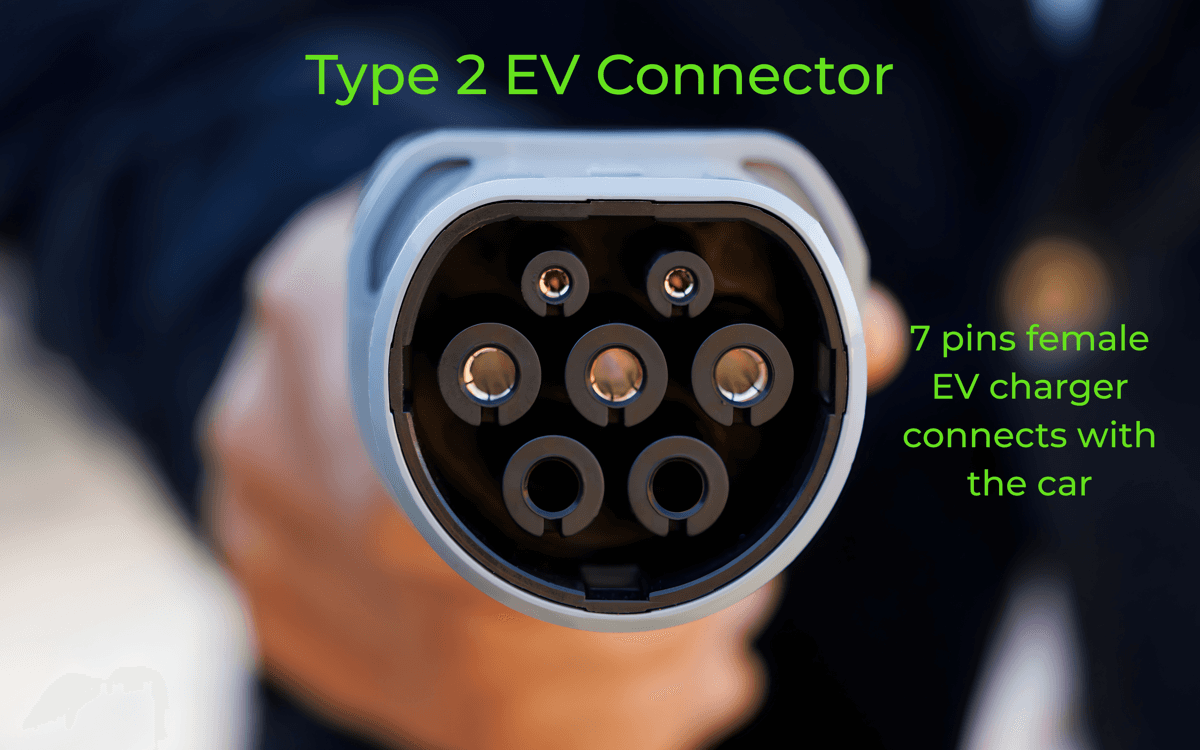
Type 2 EV charger example

For a first-time buyer, that means one practical thing above all else:

If you are charging at home or using everyday public AC charging, Type 2 is usually the connector that matters most.

The official standard

IEC 62196 explained simply

If you want the technical name behind the connector, it sits under the IEC 62196 standard family, which covers plugs, socket-outlets, vehicle connectors and vehicle inlets for conductive charging of electric vehicles.

Type 2 is standardized for AC charging, while DC rapid charging configurations such as Combo 2 / CCS sit under a different part of the standard family.

Why this matters

Type 2 is not just a brand choice or a random plug shape. It is part of a wider interoperable charging standard used across European markets, which is why travel, charging compatibility, and charger selection are much simpler than many first-time buyers expect.

Type 2 technical specifications

Connector family

Type 2 belongs to the IEC/EN 62196-2 AC charging standard.

Charging type

Type 2 is used for AC charging, not standalone ultra-rapid DC charging.

Pin layout

Type 2 uses a seven-contact design that supports both single-phase and three-phase AC charging arrangements.

Typical use

Common for home wall charging, portable AC charging, untethered public AC charge points, and destination charging such as hotels, workplaces, and car parks.

Power range

Type 2 works across a range of AC charging speeds, but the connector standard itself does not guarantee the charging speed you will see in practice.

UK and EU compatibility

Both the UK and mainland Europe use Type 2 for AC and CCS / Combo 2 for most modern DC rapid charging.

Important

Type 2 does not automatically mean fast charging

This is one of the biggest mistakes new EV buyers make. They assume Type 2 = fast, bigger kW = always better, or that any charger with the right plug will charge at maximum speed.

Your real charging speed depends on:

  • the charger
  • your car’s onboard AC charger
  • whether the supply is single-phase or three-phase
  • battery conditions
  • charging curve and system limits

Type 2 vs CCS

The difference first-time buyers must understand

Many modern EVs use Type 2 for AC charging and CCS for DC rapid charging.

CCS is effectively a combined system: the upper section is based on the Type 2 AC shape, while the lower part adds the larger DC pins used for high-power rapid charging.

Type 2

Everyday AC charging

CCS

Faster DC charging on longer journeys

Why Type 2 is so important in the UK and Europe

For most first-time EV owners, the majority of charging does not happen at an ultra-rapid motorway charger. It happens in ordinary daily life.

This is why Type 2 is not just “another plug type.” It is the everyday charging standard most new EV owners actually live with.

Single-phase and three-phase

Type 2 works with both single-phase and three-phase AC systems. In the UK, most homes are single-phase. Some commercial sites and some other European installations use three-phase more often.

When buying a charger or cable, do not think only about the connector. Think about your car, your property supply, and your usual charging routine.

Do you need a Type 2 cable?

Often, yes. Some chargers have a tethered cable attached already. Others are untethered and require you to use your own cable.

On public AC charging, many units require the driver to bring a Type 2 to Type 2 cable.

Ask yourself:

Will I be using public AC chargers that expect me to carry my own cable?

Is every EV in the UK and Europe Type 2?

Not every EV ever made, but for modern UK and European driving, Type 2 is the dominant AC standard.

There are exceptions, especially among older vehicles and certain legacy charging standards, but Type 2 is the normal default for current UK/EU AC charging.

For most first-time buyers, the safest assumption is: start with Type 2 as the baseline unless your vehicle handbook says otherwise.

Common myths about Type 2

“If it has Type 2, it will charge fast”

Not necessarily. Type 2 tells you the connector standard, not your guaranteed real-world speed.

“Type 2 and CCS are the same thing”

Not quite. They are related, but Type 2 is the AC connector standard, while CCS adds DC rapid-charging capability.

“I only need to know the plug shape”

You should also know your car’s onboard AC charging limit, whether you charge more often at home or in public, and whether you need your own cable.

Before you buy

A simple checklist before buying a Type 2 charger or cable

1

What inlet does your car have?

Check the handbook or the charge port itself.

2

Will you charge mainly at home or mainly in public?

This changes whether a tethered charger or portable cable matters more.

3

What AC charging speed can your car actually accept?

Do not buy only by the charger’s headline rating.

4

Is your installation single-phase or three-phase?

This affects what is realistically achievable.

5

Do you need a cable for public AC charging?

Many drivers do, especially when using untethered public points.

Buyer takeaway

For a first-time EV buyer in the UK or Europe, the easiest way to think about Type 2 is this:

Type 2 is the standard AC charging connector you are most likely to use in everyday life. It sits within the IEC 62196 standards family, most commonly under IEC/EN 62196-2 for AC charging, and it is the normal connector for home charging and much public AC charging across the UK and EU.

Meanwhile, rapid DC charging is usually handled through CCS / Combo 2.

So the smart buying decision is not just “Which charger looks most powerful?” It is “What Type 2 setup fits my car, my home, and the way I will actually charge?”