Evogiant storefront logo, link to home page
Sign in
Home charging basicsCosts + rangeFirst-time buyer guide

Home EV Charging Guide: Speeds, Costs, Range and Choosing the Right Charger

If you are new to electric vehicles, charging can seem more complicated than it really is. Terms like kW, kWh, fast charging, rapid charging, range, and tethered chargers often cause confusion.

This guide explains the basics in a simple way. It covers how home charging works, the difference between charging speeds, what charger type may suit you, how long charging takes, how much it costs, and what to know before buying an EV charger or cable.

What Is Home EV Charging?

Home charging means charging your EV from your home electricity supply, usually through a wall-mounted charger.

For most drivers, this is the easiest and most cost-effective way to charge because the car can be plugged in overnight while parked at home. Instead of relying on public chargers all the time, you can start each day with enough charge for regular driving.
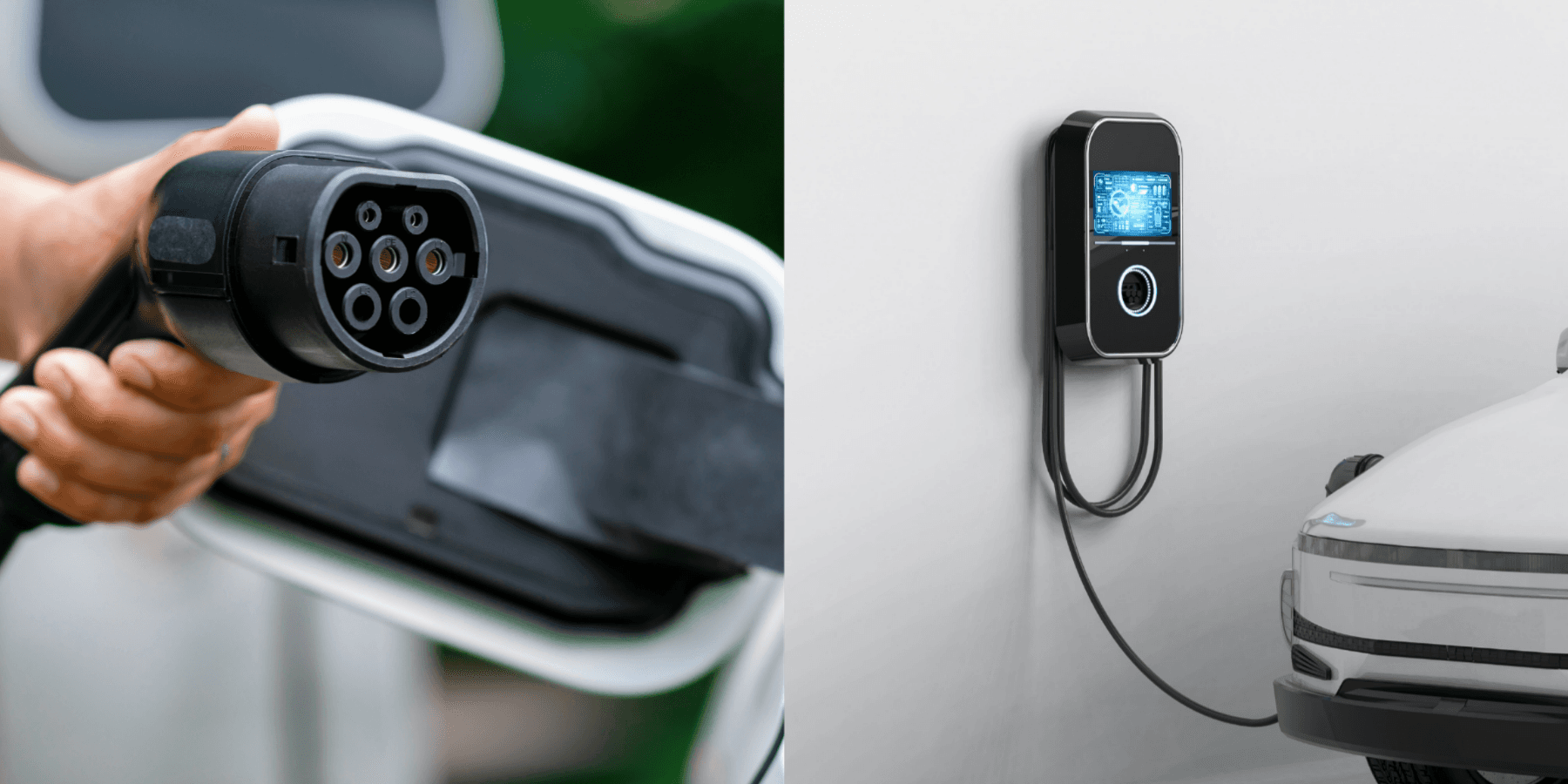
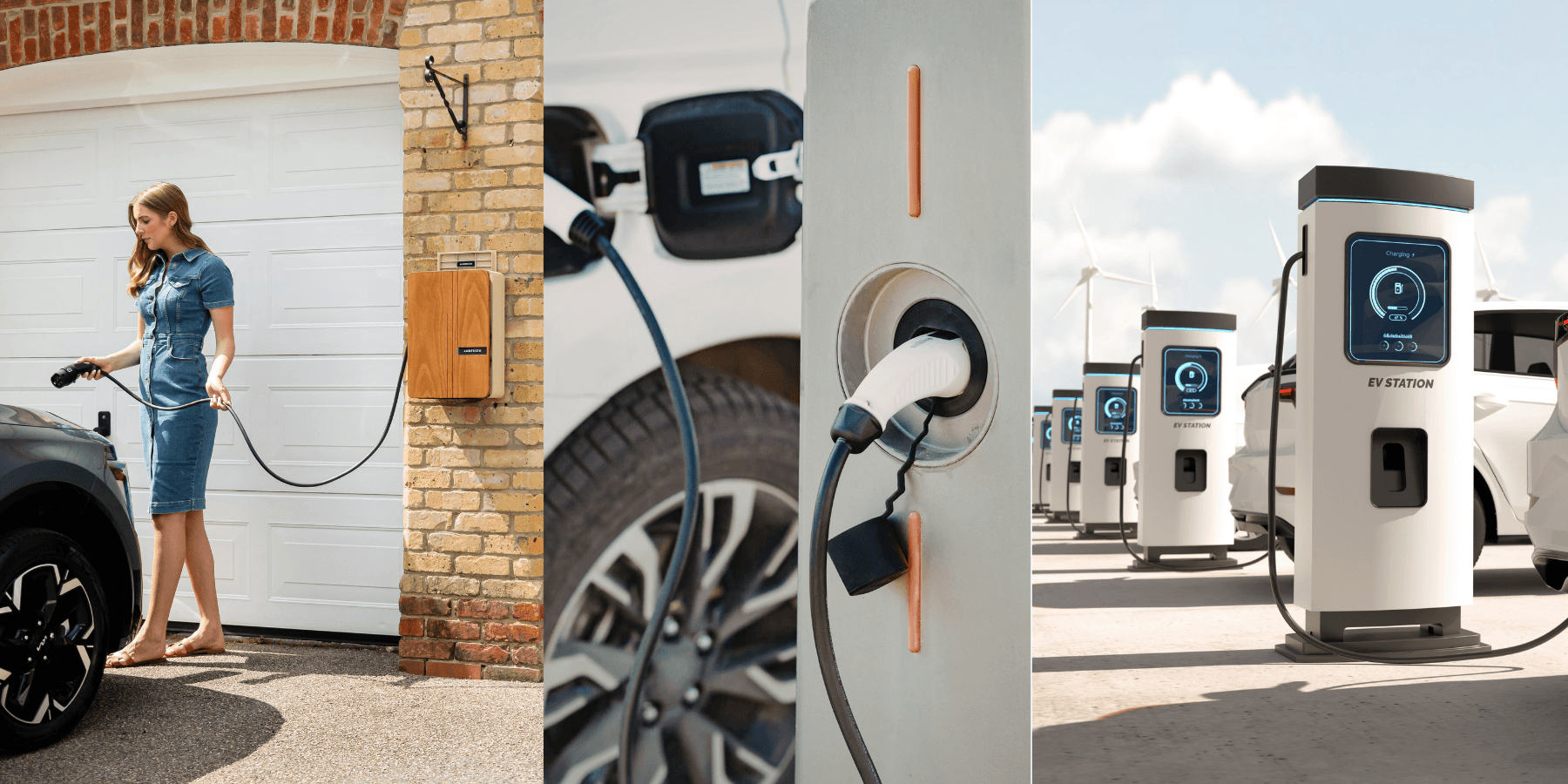
Home EV charging setup with wall charger and parked electric car

Fast Charging

Fast charging usually means AC charging, commonly at 7kW, 11kW or 22kW. This is the type most often used at home, at workplaces, and at many public destination chargers.

Fast AC charging is usually best for overnight charging or longer stays.

Rapid Charging

Rapid charging usually means higher-power DC charging, typically 50kW and above. This is designed to charge the battery much faster and is mainly used at public charging stations for longer journeys and quick top-ups.

Rapid DC charging is better when speed matters during travel.

Which one is better?

It depends on how you actually use your car

Neither is automatically better. For most EV owners, home charging covers daily needs, while rapid charging is used when needed on the road.

Types of EV Chargers

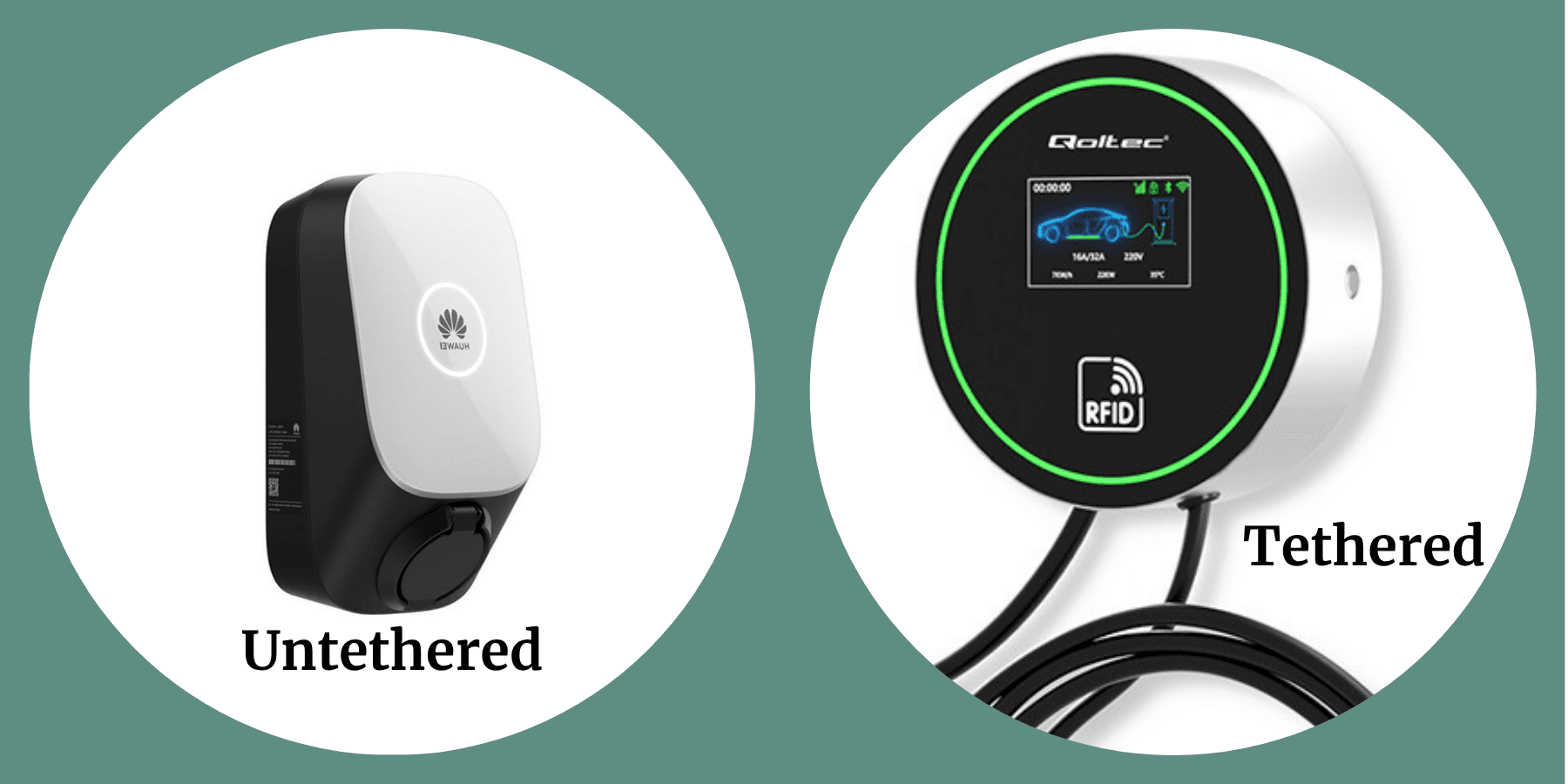
Tethered Chargers

A tethered charger has the cable attached permanently.

Benefits of tethered chargers

  • quicker to use every day
  • no need to take a cable out each time
  • convenient for regular home charging

Choose tethered if convenience matters most.

Untethered Chargers

An untethered charger has a socket instead of a fixed cable, so you plug in your own charging cable when needed.

Benefits of untethered chargers

  • cleaner look on the wall
  • more flexibility
  • useful if you may change vehicle later

Choose untethered if you want flexibility and a tidier finish.

Tethered vs Untethered EV Chargers

Evogiant Tip: Evogiant offers practical charging solutions and compatible accessories, including EV charging cables designed for everyday use at home and on the go.

What Does kWh Mean?

kWh means kilowatt-hour. It is a unit of energy.

In simple terms, kWh tells you how much electricity an EV battery can store, or how much energy is used during charging.

Easy way to understand it

kW = charging power
kWh = battery capacity or energy used

kW is speed, kWh is size.

What kW Charger Do I Need?

The right charger depends on your car’s charging capability, your home electrical setup, how often you drive, and how quickly you need to recharge.

A more powerful charger is not always necessary. If your vehicle cannot accept higher AC charging speeds, extra charger power may not make a real difference.

Choose a charger based on your real usage, not just the biggest number.

Evogiant Tip: An Evogiant EV charger is best chosen around your vehicle, parking setup and daily mileage, not only the highest charger output.

What Is Vehicle Range?

Vehicle range is the distance your EV can travel before it needs recharging.

Real-world range can change depending on:

  • weather
  • driving style
  • road type
  • speed
  • heating or air conditioning use
  • passenger or luggage load

A better question is: Will this EV comfortably cover my normal weekly driving?

How Long Does EV Charging Take?

Charging time depends on several factors, including:

  • charger power
  • battery size
  • starting battery level
  • vehicle charging limit
  • temperature and conditions

Simple rule

Home charging is usually ideal for longer charging periods such as overnight. Public rapid charging is more useful when you need to add charge quickly during a journey.

How Much Does EV Charging Cost?

Home Charging

Usually the cheapest option, especially if you use a suitable electricity tariff.

Public AC Charging

Usually moderate in cost compared with home charging and rapid charging.

Rapid Charging

Usually the highest-cost option, but useful when speed matters on the road.

EV Charging Costs Comparison

Evogiant Tip: A reliable home setup with the right Evogiant charger and cable can help reduce dependence on more expensive public charging.

Before buying

Choosing the Right EV Charger and Cable

1

Can I charge at home?

If yes, home charging is usually the best place to start.

2

Do I want tethered or untethered?

Choose convenience or flexibility based on your setup.

3

Do I understand kW and kWh?

This helps you avoid buying the wrong charger.

4

How far do I really drive?

Match charger choice to daily use, not only best-case numbers.

5

Will I need a charging cable for public use?

Many drivers benefit from carrying a quality EV cable.

Evogiant Product Placement: At Evogiant, the goal is to make charging simpler with practical home EV chargers, reliable EV charging cables, and solutions suited to first-time EV owners and everyday use.

Final Thoughts

EV charging becomes much easier once you understand the basics.

Home charging is about convenience.
kW is about charging speed.
kWh is about battery energy.
Range is about real usable distance.

For most drivers, the right solution is not the most powerful charger on paper. It is the one that fits your car, your home and the way you actually drive.